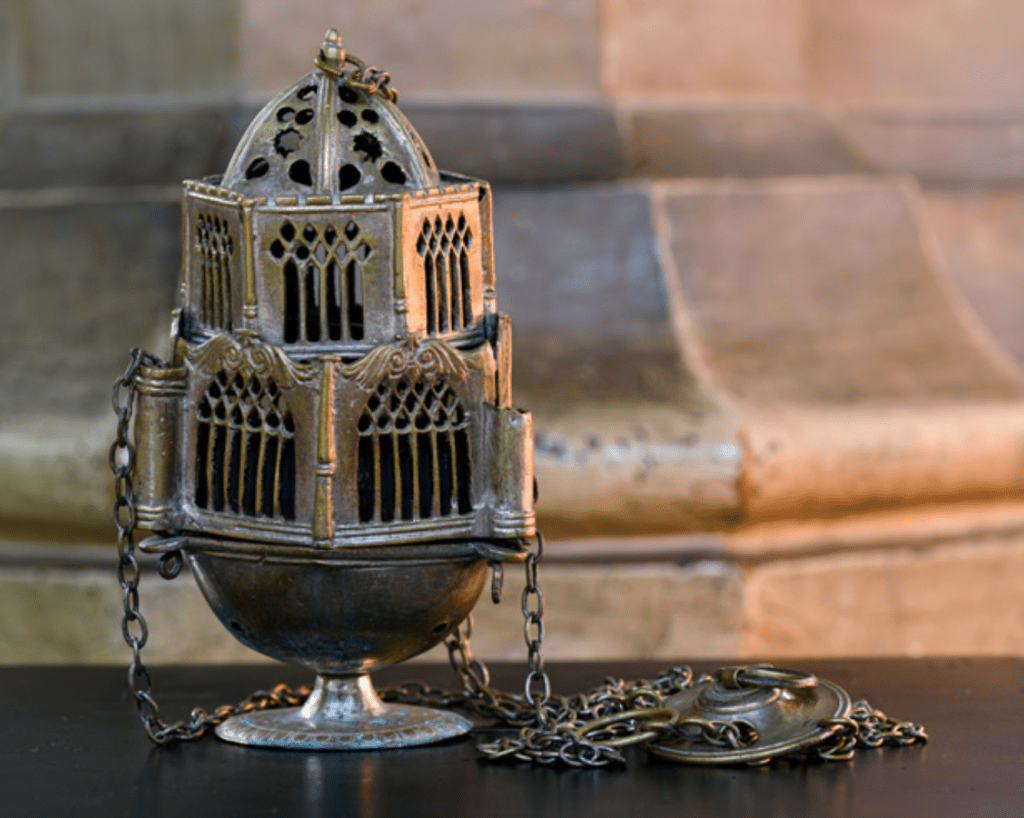
(Image 16th-century censers, Blois Cathedral © Léonard de Serres)
In a museum which was once the living and dying chambers of Leonardo De Vinci, Château du Clos Lucé in central France, there is an exhibition exploring scent during the time of this Rennaissance man and parenthetically his mother “Catarina’s” life. The exhibition press materials share that his Mom was purportedly an “ex-slave” and that Leonardo collected and experimented with perfumes of his day.
As scent does naturally, simply reading about the scents and imagining Leonardo trying to dissect the perfumes and recreate recipes on his own inspires the reader without actually being present for the exhibition. Important to note that in the Renaissance perfumes were often used to mask unpleasant smells (like we do today too), and considered to have a medicinal effect to cure maladies transferred through foul air or miasma.
Once would think that we should not project our 2024 experience with Leonardo’s, where the scent inquiries were likely more urgent as he understood them to be on par with visual and auditory senses and as a way to protect from ills. That said, how cool to read his notes that describe what seems to be enfleurage which, while rare, is a way to distill fragrance from plant materials to this day:
“Remove that yellow surface which covers oranges and distill them in an alembic,” he wrote in Codex Forster, “until the distillation may be said to be perfect.”
Would it be nice to smell an amber necklace made popular in the 1489 painting “Lady with an Ermine” ? Yes. Would it be curious to smell the pomander recreated from Leonardo’s sketchbook? Absolutely. They describe the amber necklace as smelling sweet and earthy, however she is holding a wild animal , could the necklace have a smell of ermine treats or nip? Also on display is a burning device modeled after a bird known as an oiselet de chypre which was featured in Leonardo’s notebooks amongst other burning devices he designed.
Natural materials have not changed their scent as far a we know, though it is apropos to wonder if a rose or citrus zest smell the same no as they did 600 years ago. I’m guessing slightly different, though the hug (rose) and the pick-me-up (lemon) sensations to our nervous systems probably stay constant.
It is unclear why the mother is featured in the exhibition, since so very little is truly known about her. The exhibition purports “Leonardo’s interest in perfumes may have been inspired by his mother Caterina, a mysterious woman who may have been an emancipated person taken to Italy from her home in the Caucasus by way of Constantinople. (This is still unknown after years of inconclusive research.)”
In total the exhibit boasts 28 fragrances to smell including civet, rose, aloe, jasmine, and labdanum. The exhibition is a collaboration between the exhibition curators, historians and perfumers from the Givaudan company.
TERMS ASSOCIATED FOR ODORBET:
ALEMBIC – A type of still, an apparatus used in the process of distillation. Alembics were employed in chemistry and biomedical laboratories as well as in distilling cognac. By extension, “alembic” is anything that refines or transmutes as if by distillation. For example, the alembic of the surgeon’s mind.
MIASMA – foul smelling air. a highly unpleasant or unhealthy smell or vapor. “a miasma of stale alcohol hung around him like marsh gas”
OISELET DE CHYPRE – “Birds of Cyprus” – medieval objects to seen spaces. These “perfumed ” oiselets de Chypre ” that favourite toy of the mediaeval boudoir which she was probably the first to introduce into Aragon. These pomanders of scented paste, generally moulded into the shape of a bird ” hence their name ” were hung in the apartments of great ladies, in cages or similar receptacles, to serve the double purpose of purifying as well as of perfuming the room. ” – source, Miron E.L The Queens of Aragon: Their Lives and Times. Reprint. London: Forgotten Books, 2013. 152-3, and Perfume Shrine post.
POMANDER – 1 : a mixture of aromatic substances enclosed in a perforated bag or box and used to scent clothes and linens or formerly carried as a guard against infection; also : a clove-studded orange or apple used for the same purposes 2 : a box or hollow fruit-shaped ball for holding pomander.
 Odorbet
Leave a comment