
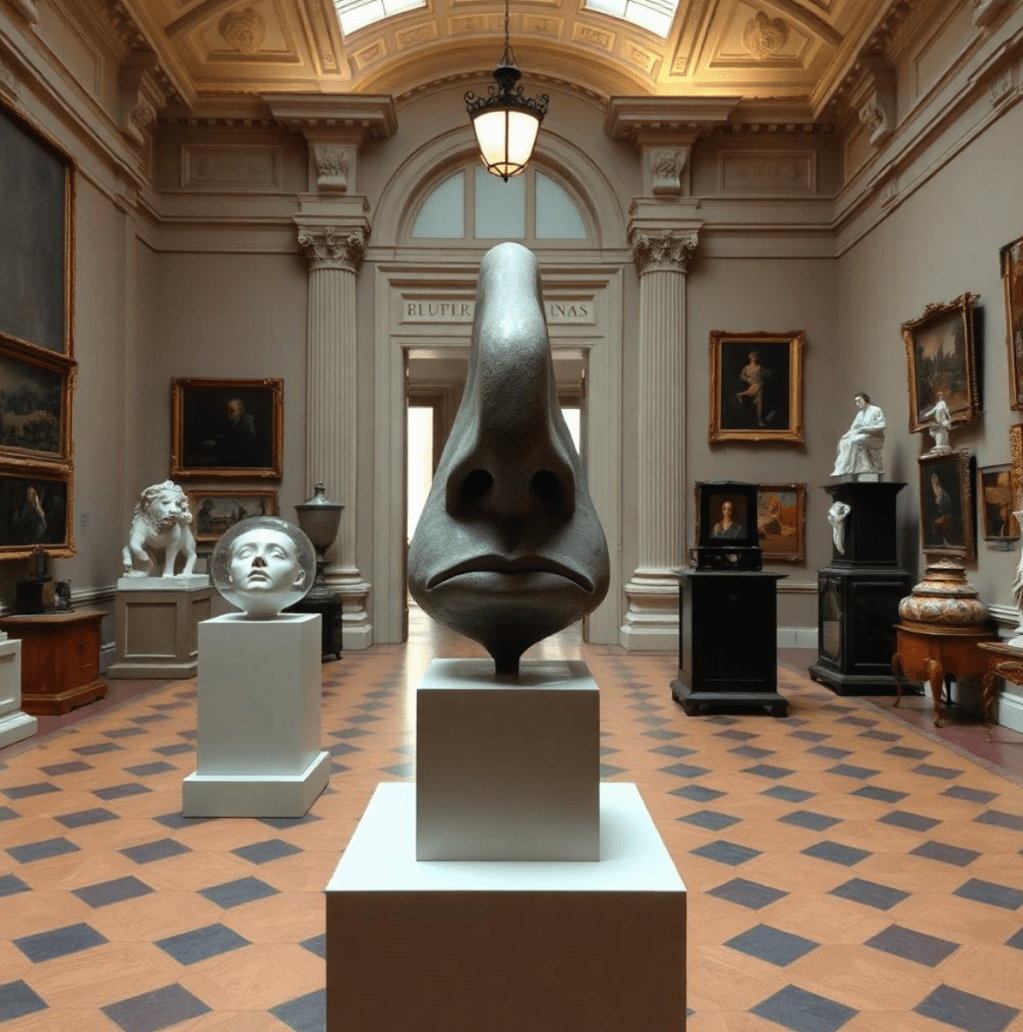
The scent of a museum is generally considered quiet, idealized and hermetic. Institutions try hard to create sterile moments for the visual and non-touchable to speak aesthetically without the intrusion of other senses (no touching! no smells! no voices please!). Regardless of old or new art, museums often smell like their audiences (often stale le labo plus floor varnish).
This Odorbet installation, “Empyreum Air,” is provided by Canadian curator Lindsey Sherman, who drew from her research on olfactory art (a term originally coined by Jim Drobnick). Drobnick’s reference and the term itself are curious, especially the aspects concerning classes and specific odors in museums. Interestingly, museums used to close at 5 p.m. daily and were not open on weekends, which served as another way to restrict public access to these hallowed halls. Fortunately, times have changed, and museums have evolved into community spaces that embrace everyone. However, there is still much institutional critique to be made regarding collections worldwide, and scent remains a powerful metaphor for that critique.
Thank you Lindsey for sharing!

Empyrean Air
Empyrean air is the highest level of heaven that is occupied by fire. Colloquially, often used to describe a pure or idealized space. Comes from the Greek empyreumaand empyreumatic, applied to the characteristic smell of the burning or charring of vegetable or animal matter. Used by theorist Jim Drobnick in “Reveries, Assaults and Evaporating Presences: Olfactory Dimensions in Contemporary Art” PARACHUTE #89, Winter 1998, pp. 10-19 to describe the air in the museum, in particular the 19th century idealized museum that is free of the scent of the lower classes.
Jim followed up recently with a quote using “empyrean air” from Hazlitt in the 1820s:
Art, lovely Art! “Balm of hurt minds, chief nourisher in life’s feast, great Nature’s second course!” Time’s treasurer, the unsullied mirror of the mind of man! … A Collection of this sort … is a cure … for low thoughted cares and uneasy passions. We are transported to another sphere …. We breathe the empyrean air … and seem identified with the permanent form of things. The business of the world at large, and of its pleasures, appear(s] like a vanity and an impertinence. What signify the hubbub, the shifting scenery, the folly, the idle fashions without, when compared to the solitude, the silence
of speaking looks, the unfading forms within.
Jim uses the term “empyrean air” which in context I take to mean godly and pure, the expected smell of the museum. Its very short Wikipedia entry says it comes from the Greek empyreuma and empyreumatic, applied to the characteristic smell of the burning or charring of vegetable or animal matter. So empyrean air can be used to describe the smell of sanitized institutional spaces, heavenly metaphorical spaces, or the smell of burning animal/burning vegetal material.
Empyrean (adjective) (historic usage as a noun)
Related:
Empyreuma (noun) the peculiar odor of organic substances burned in closed vessels.
Empyreumatic (adjective) having an odor of burnt organic matter as a result of decomposition at high temperatures
Empyrean is derived from Medieval Latin empyreus, and Ancient Greek empyros meaning in or on the fire; pyr = fire. Empyrean shares this Greek origin with the noun empyreuma and the adjective empyreumatic, applied to the specific smells of the burning or charring of vegetable or animal matter.
In ancient and medieval cosmology, empyrean was considered the highest or outermost level of heaven that is occupied entirely by fire. Over time this fiery realm also becomes inhabited by celestial or holy beings. In the Middle Ages, early Christians adopted this idea of heaven as the realm of their god. The Empyrean was Dante’s highest level of heaven in the Divine Comedy. Dante describes The Empyrean as a place outside of time with flowers growing along the banks of a river of glowing light and fire. Sparks fly out from this river and settle on the surrounding flowers. A massive white rose is at the centre of this final heavenly realm and this rose contains blessed souls nestled into its thousands of tiers. Presumably, Dante’s Empyrean smells of rose and singed petals, however, he does not describe the smell at all. Here, empyrean has lost its association with scent. Through its use over time, empyrean has also lost its relation to fire, and this shifted to metaphysical and metaphorical associations with bright white light.
In contemporary usage, empyrean can be used to describe heaven but also more generally to describe a pure or idealized space. It can also relate to vast awe-inspiring interior spaces, like that of a church. Additionally, empyrean can conjure more conceptual notions of The Sublime when describing picturesque landscapes.
In 1998 writer and theorist Jim Drobnick used the term “Empyrean air” in the essay “Reveries, Assaults and Evaporating Presences: Olfactory Dimensions in Contemporary Art” to describe the air in the museum. In particular, to describe the 19th century idealized museum that is free of scents associated with the lower classes. Here, Drobnik injects a contemporary olfactory connotation back into the word, but now a completely different olfactory meaning than its historic one.
Considering these shifting olfactory references associated with empyrean over time and its historic roots, empyrean could be used to describe the smell of sanitized institutional spaces, heavenly metaphorical or ideal spaces, or the smell of burning animal/burning vegetal material.
Lindsey Sharman is a curator and writer based on Treaty 6 territory in amiskwaciy-wâskahikan (Edmonton, Canada). She is the curator of the Art Gallery of Alberta and is interested in sensorial art experiences and the aesthetics of olfaction.
Sources:
https://www.encyclopedia.com/humanities/dictionaries-thesauruses-pictures-and-press-releases/empyrean#:~:text=empyrean%2C%20the%20heaven%2C%20in%20particular,chicagomanualofstyle.org/tools_citationguide.html
https://www.oxfordreference.com/display/10.1093/oi/authority.20110803095750441
https://en.wikipedia.org/wiki/Empyrean#:~:text=The%20word%20derives%20from%20the,have%20the%20same%20Greek%20origin.
https://www.merriam-webster.com/medical/empyreuma
https://www.merriam-webster.com/medical/empyreumatic
https://danteworlds.laits.utexas.edu/paradiso/10empyrean.html
https://ahc.leeds.ac.uk/discover-dante/doc/paradiso#:~:text=The%20Empyrean%20is%20an%20immaterial,souls%20in%20the%20different%20heavens.
https://www.david-howes.com/senses/Drobnick.htm
______________
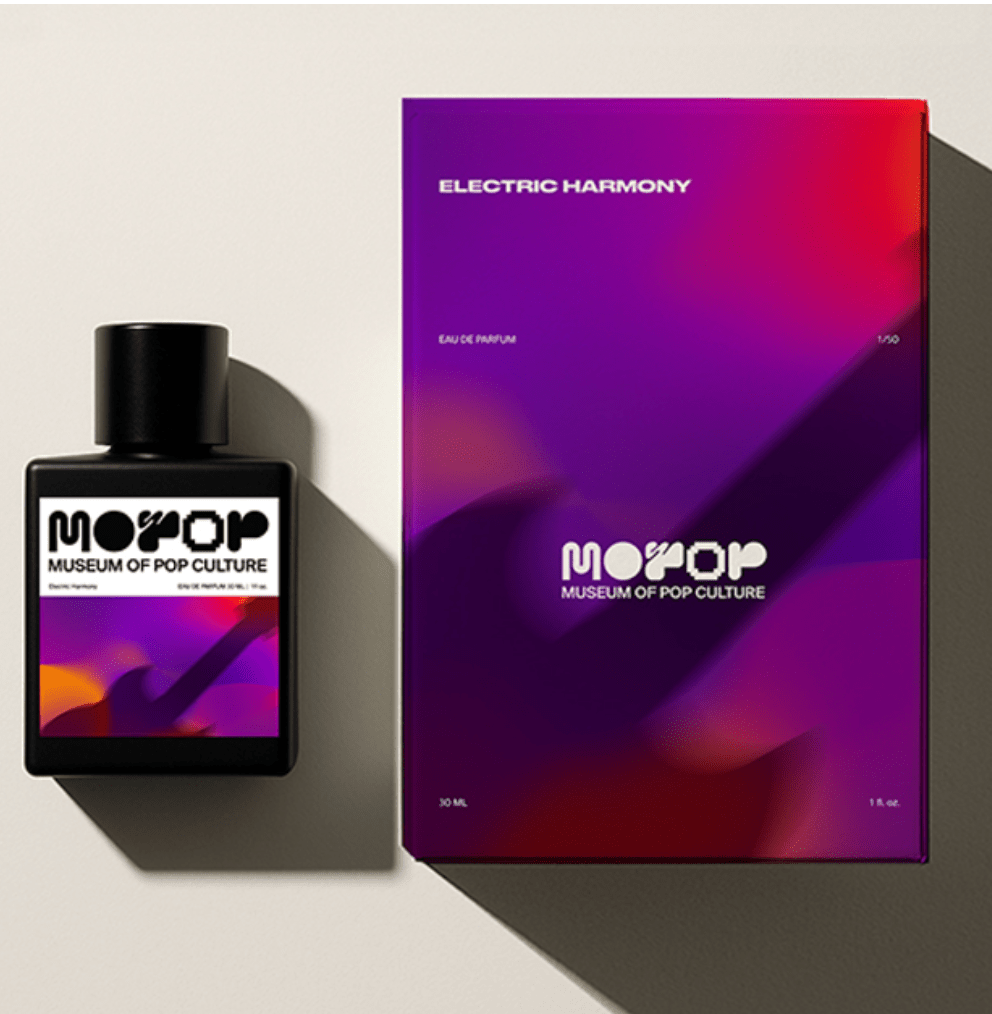
Postscript/Odorbet: While many museum noses are neutered, I had the opportunity to smell a recent project this past Spring. The Pop Museum created what is purportedly the “world’s first custom fragrance for a museum created using olfactory intelligence (OI), an AI-powered technology”. Developed by Christophe Laudamiel, this scent captures the essence of the museum—embodying the fast, cheap, and chaotic spirit of pop culture: made by AI, it serves as a bittersweet reflection of what is pop culture. This is a quirky though obvious scent coupled with administrative inspiration for audiences to dwell longer in a space, not unlike the purveyors of Target using carefully curated comfort scents in their stores or ice cream parlors utilizing waffle cone makers. Anything to lure and hold close your attention dear humans. – CHE
 Odorbet
Leave a comment