Recent Notes from the Invisible, Sometimes Confusing, Often Privileged World of Perfumery
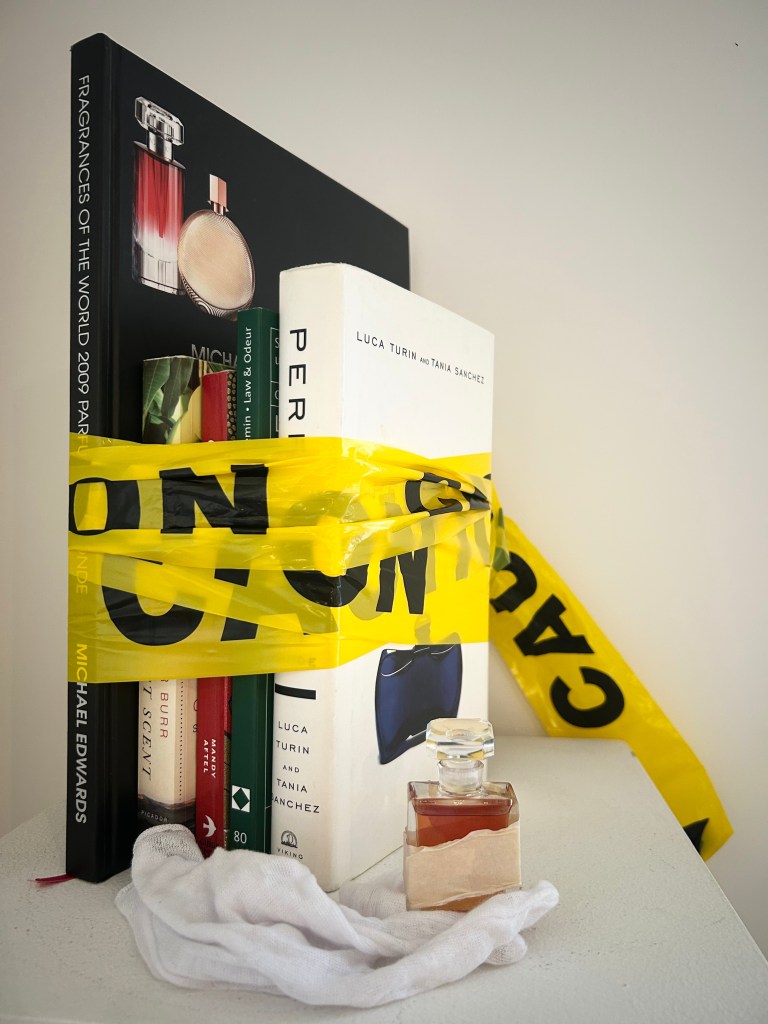
As part of his continued, generous efforts to educate the consumer, experts or influencers and businesses of the importance of ingredient transparency in perfumery, officially the Perfumery Code of Ethics, Christophe Laudamiel and co-author Tanishq Kumar wrote a chapter (page 35) in a free eBook “Eco Well: The Science in Beauty eBook” published this month. The chapter focuses on “fragrance and ingredients”, and reminds a scent audience that notes explored in marketing materials are not always present scent molecules or ingredients in the formulas. The dialogue around notes, ingredients and scent molecules is a confusing one at the moment for scent audiences and new practitioners in the art of perfumery.
Why does this matter?
It depends and the answer is complicated. Christophe’s intention, and ostensibly those who have signed the Perfumery Code of Ethics, is that the general public must be educated in order to transform the discipline of perfumery into an art where all of its landscape are accessible and laid bare for contemplation, use and experimentation – like an art. The hope is that through language and knowledge we may critique and explore scent more meaningfully. By sharing the scientific reality of scent compositions and removing reliance on packaging and marketing details, we may have a better chance to experience the medium of perfumery more honestly. When we remove false expectations and blinders, we can play.
The co-authors emphasize that identifier inflation is causing confusion with the consumer and even the experts, where the basil is not the basil, the jasmine is not the jasmine and there’s never been a tonka in the mix. The identifier inflation trend reflects similar trends in corporate America where employees receive grand titles (“director”! “VP”!), that hide the uninspired lackey work, quickly being consumer by AI, in order to boost morale and keep people coming back and working 80 hours a week for hopes of another “title”. So too are grand note titles, identifiers, are being confused with actual materials and scent molecules in perfume formulas, leaving the scent audience mislead (understatement).
Molecules, ingredients and notes oh my
After reading the short chapter, one is asked to consider ingredients versus notes and to continue to be suspicious of marketing claims. Christophe also shares a new taxonomy of scent descriptors (link in eBook) he created while researching and making new innovative scent molecules from Osmo, a Google backed AI company and his employer. These new-y descriptors describe notes might appeal to the novice and tickle the expert with new scent categories and descriptors such as “soulful”.
A taxonomy classification system or scent descriptor such as this list by Osmo is not a map to the actual molecules or ingredients, it is simply a new way for a scent audience to appreciate and describe different types of smell and describe the notes. This new classification system, and the understanding that novel scent molecules created by AI will forever be jasmine-ish, or cucumber-ish, implies either great confusion for the consumer, or a great point of access and scale if the molecules are deemed safe and made available to the general public.
While the novel molecules are innovative from a chemistry and scent molecule perspective, the materials to experience directly are not available to the lay person or noobie perfumer. These innovative new aroma molecules are proprietary and may be used to create never before compositions and will contribute to the rosy-ish conversation around notes and “true” ingredients (e.g., the rose smell is present in the notes, though no actual rose is present). This can be supportive for the environment by the way, and by delineating them as new eco-friendly ingredients there can be a larger more intentional honoring when the actual ingredient is present.
The gaslighting consumers, aspiring perfumers and artists receive when trying to learn and experience happens often and without consequence in the perfumery world. What is referred to as know-how in the perfume discipline is as equal true experience and mastery all the while holding industry secrets and short cuts. This know-how continues to be a position of privilege, and has held up a deeply hierarchical system that continues to persist as a moniker for old fashioned gatekeeping. While it tries through various projects to break free of historic patterns, perfume still persists not a a playful arm of art, but as a right or wrong, best or worst, top or bottom, winner or loser, access or no access.
Consequences for the scent audience
If I smell a new perfume and there is a granola note, or if I feel something smells band-aid adjacent it’s a pleasure, a moment, an impression, and a story for me to explore. The perfumer may have tried to create the smell of a lagoon in Asia, and the brand’s marketing crew touts “hyacynth and palm trees” despite maybe neither being present at a lagoon in Asia. This smell exchange is a creative exercise for all parties involved including the audience. My personal response to the scent of breakfast cereal is as valid as the perfumer’s intention in the scent project, just as with painting, music, sculpture etc. In an art context this moves the responsibility to the perfumer and not the consumer: if they would like to make another presentation or impression, they must become a better conductor of the materials. The audience is not to blame.
A work of art must carry in itself its complete significance and impose it upon the beholder even before he can identify the subject matter. – Henri Matisse
We rarely assess music through its parts and intuitively consume the whole. Unless we are a critic of music, we rarely pull the flower out to inspect its roots – we let the horns, wind and bass do its business for us to marvel holisticaly. Same goes for perfume, painting, wine, theater or whatever art we choose to consume. That said, as an audience we don’t like to feel the wool pulled over our heads and noses. If someone says something was aged in an oak barrel, we want to believe that and not that they added wood chips into the actual juice, or added a chemical to boost the wood notes. At a time when our favorite playlists are slowly getting pock marked by Temu covers of our favorite songs, this assessments of the art product is getting more important to attend to.
If you are a casual scent lover, please continue to make up your own beautiful stories of the notes you identify and stories you smell and feel. Stay mindful that the smell of “vetiver” alluded to in the label or marketing materials is likely not there. Imagine ordering sushi and while it looks like sushi you bite it and realize it’s CAKE! These invisible games will continue to happen, so please don’t take the note descriptions so seriously, they are inflated, and make up your own note sandwich, its far more interesting than marketing speak, and your impressions do not need to be science-backed or understood.
Consequences for new and independent perfumers or artists
The pyramid remains of who is on top and those on bottom – scent artists wishing to create juice will forever be at a disadvantage to those that have labs and molecules at their disposal. We will remain grateful to the middle folks that have generously shared “new” molecules and ingredients when they are granted access to them (e.g., Perfumers Apprentice, Eden Botanicals, Pell Wall), though will need to watch from afar as “innovative scent molecule creation” continues to happen in a narrow vacuum in the specialized world and access of know-how, and access to genuine source materials remains a mystery.



 Odorbet
Leave a comment